The Melatonin Problem: Dosage Side Effects, Misleading Labels, and Tart Cherry for Sleep
Medically reviewed for accuracy by Dr. Bruce Rubinowicz, Board-Certified Neurologist & Sleep Medicine Specialist
Quick Answer
Lab-made and cherry-made melatonin are the exact same molecule, so synthetic versus natural is not a safety difference. The real melatonin problems are the milligram mega-doses in supplement pills versus the micrograms in food, an unregulated market with misleading labels, and the alarming rise in pediatric melatonin poisonings from candy-like gummies. While not chemically addictive, high melatonin doses cause grogginess and vivid dreams. Used at a low dose and well-timed, it has a narrow job for circadian rhythm. Tart cherry offers food-level melatonin with modest, mixed evidence as a natural sleep aid.
Synthetic melatonin vs natural melatonin in tart cherry: which is safer for sleep? People ask it constantly, and the question has a flaw baked right into it. These are not two different substances. The melatonin a factory makes and the melatonin a cherry makes are the same compound, full stop. So pitting synthetic against natural misses the whole point. What actually matters for your sleep is the melatonin dosage, and whether anyone bothered to verify what is really inside the supplement bottle.
Synthetic vs Natural: It Is The Same Molecule
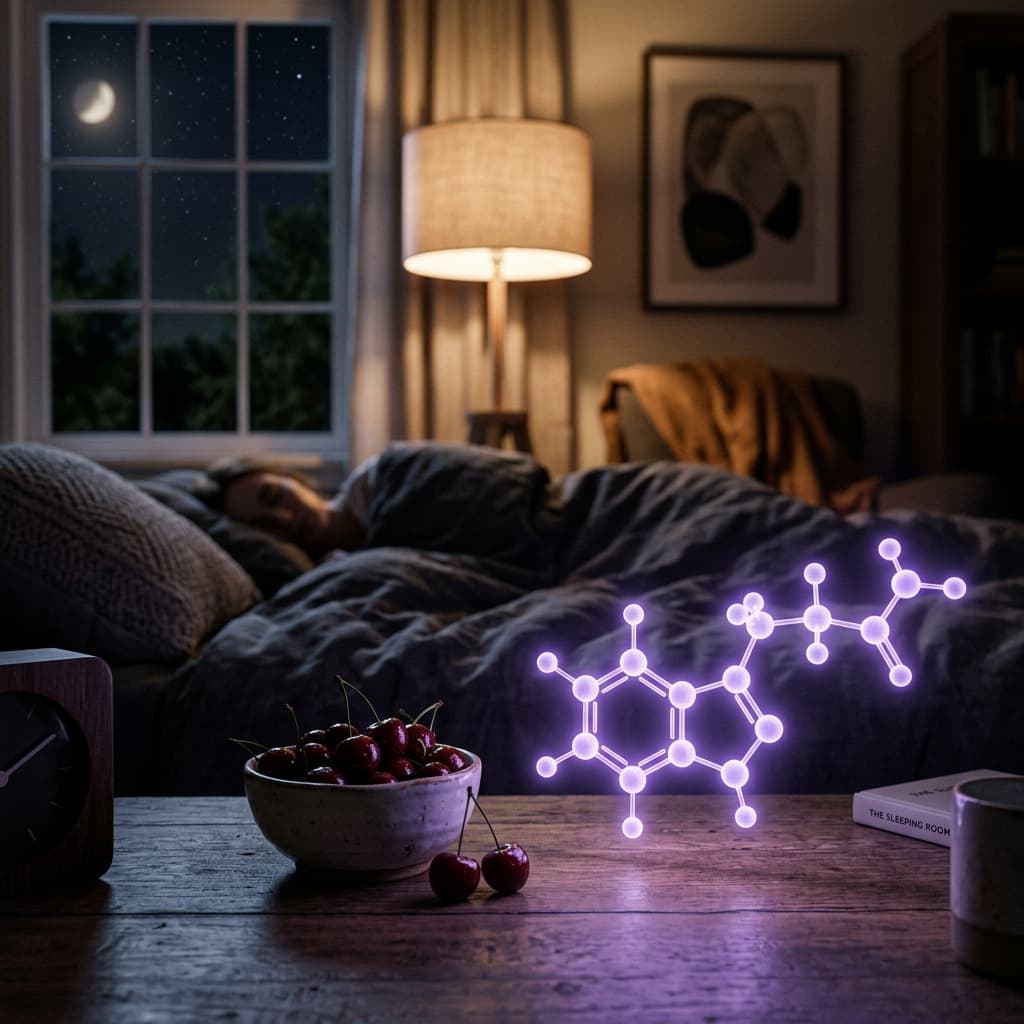
This is the part supplement marketing tends to blur. There is no special "plant version" of melatonin and no uniquely dangerous "lab version." Your body makes melatonin, cherries make melatonin, a factory makes melatonin, and in every case, it is the identical hormone, scientifically known as N-acetyl-5-methoxytryptamine.
The word "natural" on a label tells you almost nothing about safety. What changes the picture is how much you are taking, the resulting side effects, and how reliably the product was manufactured.
The Melatonin Dosage Problem Almost Nobody Mentions
Your own body releases melatonin in tiny amounts as the light fades in the evening, a trace measured in micrograms. A typical over-the-counter sleep gummy or tablet contains one to ten milligrams—often hundreds of times more than your body would ever circulate on its own. That massive dosage gap is the real story behind melatonin side effects.
Tart cherry sits at the far opposite end of that range. Montmorency cherries carry roughly thirteen nanograms of melatonin per gram. In the most-cited tart cherry sleep study, the entire daily dose delivered melatonin on the order of a tenth of a microgram—thousands of times less than a single pill (Howatson and colleagues, 2012). So when someone tells you tart cherry and a melatonin gummy both give you melatonin, they are technically right and practically very wrong. The two doses are not even in the same universe.
| Source of melatonin | Typical amount | What it is best for |
|---|---|---|
| Supplement pill or gummy | 1 to 10 mg | A short, well-timed nudge for a timing problem like jet lag |
| Your own body, nightly | A trace, in micrograms | The natural night-time signal these products are imitating |
| Montmorency tart cherry | About 13 ng per gram (roughly 0.1 mcg per dose) | A gentle, food-level amount alongside other compounds |
The Misleading Label Problem
Because melatonin is sold in the United States as a dietary supplement rather than regulated as a drug, no one is guaranteeing that the number on the front of the bottle is the number inside it.
In 2023, a JAMA analysis measured twenty-five melatonin gummy products and found twenty-two were inaccurately labeled. The actual melatonin dosage ranged from 74% to 347% of the amount on the label. One product contained CBD and no melatonin at all (Cohen and colleagues, 2023). If you cannot trust the dose, you cannot reliably predict its effects, and that uncertainty stacks on top of the fact that the doses themselves already run far too high.
The Poisoning Numbers, Read Honestly
You may have seen headlines about melatonin poisonings climbing. They are real, but they deserve a precise reading rather than a scary one. Between 2012 and 2021, US poison control centers recorded a 530% increase in pediatric melatonin ingestions, rising from roughly eight thousand reports a year to more than fifty-two thousand (CDC, 2022).
Read it closely, though, because the headline buries what is really going on. These are not adults overdosing at sensible doses. They are toddlers finding a bottle of something that looks and tastes exactly like candy and eating a fistful, and the large majority walked away with no symptoms at all. The real story is that we put a real bioactive hormone in gummy-bear form and skipped the childproofing. Treat it like medicine, keep it up high and out of reach, and the scary number deflates.
Melatonin Side Effects: Is It Addictive?
Careful with this one, because the internet version is wildly overstated. In the normal sense of the word, melatonin is not addictive. You do not build a tolerance that pushes you toward bigger and bigger doses, and quitting does not drop you into withdrawal. That is what the National Sleep Foundation and sleep clinicians will tell you.
The real downside is quieter. People get hooked on the ritual, the can't-fall-asleep-without-my-pill feeling, and once you lean on it nightly it is easy to skip the boring sleep-hygiene basics that do the real work. The grogginess and the strange, too-vivid dreams everyone complains about mostly trace back to the bigger doses. So: not chemically addictive, but very easy to lean on, and piling on more does not help.
Where Tart Cherry Actually Fits For Sleep
If the problem with supplemental melatonin is mega-dosing an isolated hormone, the appeal of tart cherry for sleep is the opposite approach. It provides a small, food-level amount of melatonin arriving alongside the other compounds it naturally travels with, including antioxidants and precursors that may support the body's own melatonin pathway. It works with your rhythm rather than flooding it.
We won't oversell it, though. The evidence for tart cherry is modest and genuinely mixed: a handful of small trials show a benefit, and a 2024 randomized trial using a common Montmorency powder dose found nothing for sleep or inflammation. So it is not a guaranteed fix, and it is not secret melatonin in disguise. It is a gentle, food-level option that works with your body instead of steamrolling it.
Why Our Sleep Gummies Leave Melatonin Out
That difference in philosophy is the thinking behind Risachi Sleep Collection. Each one pairs 20mg of CBN and 15mg of CBG with 500mg of Montmorency tart cherry as a concentrated 10:1 extract. It is third-party tested, and it contains zero added melatonin. It is designed to support staying asleep without overriding the natural clock your body already runs.
None of that is an argument against melatonin itself. Used for the right job — a circadian timing problem like jet lag or a shifted schedule, at a low dose taken at the right hour — it has a real place, and we would rather you use the correct tool than the one with our name on it. Done right, that means a low dose, an honest label, and third-party testing: the same standard we hold ourselves to. The full breakdown of timing problems versus staying-asleep problems is in CBN vs melatonin for sleep, and if you mostly wake in the small hours, why you wake up at 3 a.m. is the more useful place to start.
The Bottom Line
None of this is medical advice. Sleep that has been broken for months, loud snoring with gasping, or insomnia that will not let go deserves a clinician rather than a bigger gummy. If you take other medications, check with a physician or pharmacist before adding any supplement to your routine.
Sources
Frequently Asked Questions
Is natural melatonin from tart cherry safer than synthetic melatonin?
They are the identical molecule, so there is no chemical safety difference between lab-made and plant-made melatonin. What actually differs is dose and reliability: food sources like tart cherry deliver trace amounts (micrograms), while supplement pills deliver milligrams, and supplements are unregulated and often mislabeled.
Is melatonin addictive and what are the side effects?
Melatonin is not addictive in the usual sense. You do not build tolerance, and stopping does not cause withdrawal. However, people can become psychologically reliant on it. Very high melatonin dosage is the main cause of side effects like next-morning grogginess and vivid dreams. It is easy to over-rely on, but not chemically addictive.
Why did melatonin poisonings increase so much?
US poison control centers logged a 530% rise in pediatric melatonin ingestions between 2012 and 2021. The increase is overwhelmingly young children getting into gummies that look and taste like candy, not adults overdosing at normal doses. It is an argument for keeping melatonin supplements safely away from kids.
Does tart cherry actually work for sleep?
The evidence for tart cherry as a natural sleep aid is modest and mixed. Some small studies show a benefit, while a 2024 randomized trial found no improvement. Tart cherry is a gentle, food-level source of melatonin and other compounds, not a guaranteed fix or a stand-in for a high-dose supplement.

From Risachi
Sleep Collection Gummies
20mg CBN + 15mg CBG + 500mg Montmorency tart cherry per gummy. Melatonin-free.
- Melatonin-free — no morning fog
- Third-party lab tested, COA published
- Vegan, non-habit forming
$88.5024 Gummies per bottle
60-day money-back guarantee · Bundle savings available
Reading List
Get the next breakdown before anyone else
New sleep-science articles and lab-testing explainers, reviewed by a board-certified sleep-medicine physician. No daily email.
Educational content only — not medical advice. Unsubscribe anytime.