The Endocannabinoid System & Deep Sleep Cycles
Medically reviewed for accuracy by Dr. Bruce Rubinowicz, Board-Certified Neurologist & Sleep Medicine Specialist
Quick Answer
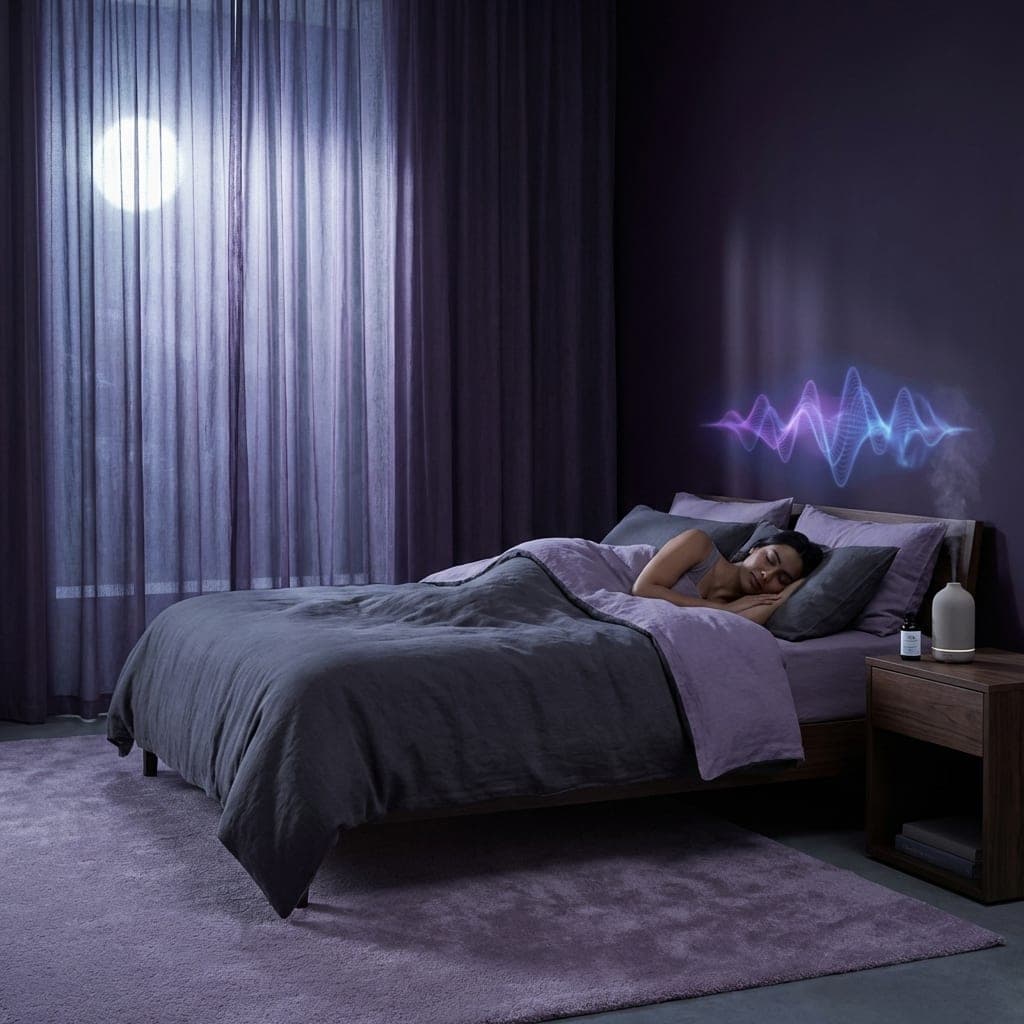
The endocannabinoid system is a regulatory network your body uses to keep things in balance, including the nightly switch between waking and sleep. CB1 receptors cluster in the brain's sleep-regulating regions, and cannabinoids like CBN appear to quiet the excitatory chatter that keeps you awake, plausibly by tuning the GABA braking system. The mechanism is genuinely promising, but direct human trials on CBN and CBG for sleep are still scarce, which is worth naming honestly.
The Signaling Network Nobody Mentioned in Health Class
The endocannabinoid system has a branding problem. The name sounds like something a dispensary marketing team invented, when it is actually one of the more consequential findings in modern neuroscience, a regulatory network your body built long before anyone cultivated a cannabis plant. Researchers found it backwards, too. They were trying to work out how THC does what it does, located the receptors that respond to it, and then realized the brain manufactures its own compounds for those same receptors. The plant did not create a system in us. It just happened to speak a chemical language our neurons were already fluent in.
Spend any time thinking about this system and one metaphor keeps coming back: housekeeping. The ECS has three working parts: receptors scattered through the brain and body, signaling molecules the body makes on demand to activate them (these are the endocannabinoids), and enzymes that assemble and dismantle those molecules with remarkable speed. A review by Murillo-Rodríguez and colleagues in Current Neuropharmacology notes that anandamide, 2-AG, the CB1 receptor, and the enzyme FAAH all participate in sleep modulation. Its job is usually summed up with the word homeostasis, which is the technical way of saying it keeps things in range. Temperature, appetite, pain, stress, immune tone. And, the reason you are here, the nightly negotiation between being awake and being asleep.
That negotiation is harder than it feels from the inside. Falling asleep requires your brain to actively silence its own arousal machinery, and deep sleep requires holding that silence for hours while still leaving the door cracked for a smoke alarm or a crying child. Any system that tunes the balance between excitation and inhibition is going to matter for sleep. The ECS is precisely that kind of system.
With CB1 Receptors, Location Is Most of the Story
CB1 receptors, the main neural docking sites for cannabinoids, are spread widely through the brain, but they are not spread evenly. They cluster, and the clustering is what makes the picture interesting for sleep. Three regions in particular carry dense populations of them:
If you wanted to design a lever for sleep, you would put it in exactly these places. Within the hypothalamus sits a small patch of tissue called the preoptic area, often described, only half-jokingly, as the sleep switch. Animal work suggests that activating CB1 receptors promotes NREM sleep, the non-dreaming kind that contains the slow-wave stages we mean when we say deep sleep; a 2016 study by Pava and colleagues in PLoS One found that increasing endocannabinoid tone lengthened NREM bouts and that CB1 signaling was necessary for that stability. When cannabinoids such as CBN engage these receptors, the downstream effect is a quieting of excitatory neural chatter, the sort of activity that keeps you composing emails at midnight.
The Brake Pedal and the Hand That Adjusts It
To understand how that quieting happens, you need one neurotransmitter and one strange piece of plumbing. The neurotransmitter is GABA, the brain's primary inhibitory signal. If glutamate is the gas, GABA is the brake, and falling asleep is largely a braking maneuver. GABA-releasing neurons clamp down on the arousal centers listed above and hold them down through the night.
The strange plumbing is something called retrograde signaling, and it is a genuinely fun thing to explain. Most communication between neurons runs one direction, from sender to receiver. Endocannabinoids break that rule. The receiving neuron manufactures them on the spot and sends them backwards across the synapse, where they tell the sending neuron to adjust its output. It works less like a message and more like a thermostat reading, a way for circuits to fine-tune their own volume in real time.
Here is where some honesty is owed, because this is the point where popular accounts usually oversimplify. Depending on the circuit, endocannabinoid signaling can turn inhibition up or dial it down. The system is a tuner, not a simple sedative. The reason this still favors sleep is that the tuning happens disproportionately in those sleep-critical regions, where the net effect of cannabinoid activity in much of the animal work leans toward calming the wake-promoting machinery. A 2014 PLoS One study by Pava and colleagues, for instance, reported that mice lacking CB1 receptors showed more fragmented sleep and reduced NREM delta power, the slow-wave activity that characterizes deep sleep. But anyone who tells you the mechanism is fully mapped is selling something. The wiring diagram is still being drawn.
What CBN and CBG Might Be Doing in There
CBN, or cannabinol, is the cannabinoid most associated with sleep, and it has an unglamorous origin story: it is largely what THC becomes as it ages and oxidizes. Older pharmacology work pegged its psychoactivity at something like a tenth of THC's, which is why a CBN gummy does not produce a high. What it retains, at least in the early research and in a great deal of user experience, is a sedative quality, plausibly through partial engagement of those CB1 receptors and the GABAergic tuning described above.
Its frequent partner, CBG (cannabigerol), comes at the problem from a different angle, with activity at receptors involved in stress and arousal rather than straightforward sedation. The thinking behind pairing the two, which is best treated as a reasonable hypothesis rather than a settled fact, is coverage. CBN leans on the sleep-onset side. CBG takes some pressure off the anxious, vigilant side that keeps people staring at the ceiling doing inventory on their lives. Formulations built on this pairing are designed to support faster sleep onset, more time in slow-wave sleep, fewer middle-of-the-night awakenings, and clearer mornings than people tend to report with synthetic sedatives. All of that is phrased carefully on purpose. These are the outcomes the mechanism predicts and early reports describe, not certainties.
An Honest Audit of the Evidence
So what do we actually know? Controlled studies have linked ECS modulation to falling asleep faster, with some reports describing differences on the order of twenty minutes. Numbers like that are worth holding loosely, because the studies differ in compounds, doses, populations, and even in how they define falling asleep. Twenty minutes for whom, under what conditions, measured how? Those questions matter more than the headline figure.
The bigger gaps are the ones researchers discuss among themselves and the marketing rarely mentions. Direct human trials on CBN for sleep are genuinely scarce; the largest to date, a 2024 randomized controlled trial by Kolobaric and colleagues in Pharmaceuticals, reported that purified CBN improved self-rated sleep outcomes, but the authors describe it as the first study of its size and ran it as a decentralized, real-world design rather than a tightly controlled clinical trial. For CBG, the human sleep data are thinner still. A 2023 review in Behavioral Sleep Medicine by Miranda and colleagues, surveying both human and animal work, concluded that the sleep-wake cycle is likely modulated by the endocannabinoid system while noting how little direct evidence exists, and the older Murillo-Rodríguez review was candid that therapeutic applications remain inconclusive or still missing. We do not fully understand individual variation, why one person's perfect dose is another person's nothing. And on deep sleep specifically, the honest answer is that we are still learning whether cannabinoid support changes sleep architecture in durable ways or mostly helps with the front door of sleep onset. The mechanism is genuinely promising. The gap between mechanism and proof is also worth naming out loud.
Working With the System Rather Than Around It
If you decide to experiment, the practical guidance is mercifully simple. Take a cannabinoid formula 30 to 45 minutes before you intend to sleep, since absorption takes roughly that long. Keep the timing consistent from night to night; your circadian system loves a predictable cue, and a routine repeated at the same hour becomes part of the wind-down signal itself. And treat the supplement as a supporting actor. No gummy on earth can out-argue a 4:45 pm espresso, a bedroom kept at sauna temperature, or a phone glowing six inches from your face at 1 am.
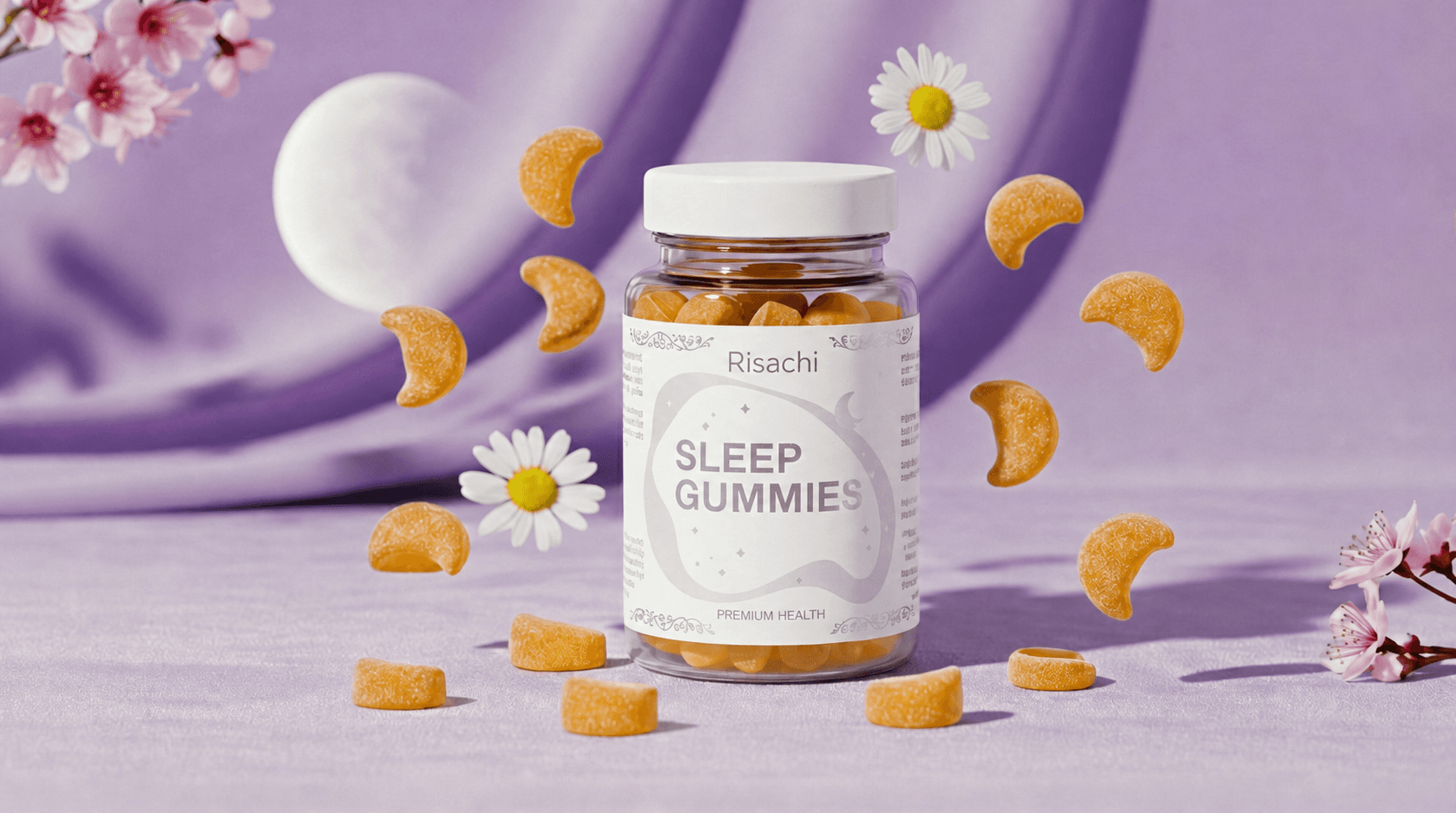
That support-not-override philosophy is the thinking behind the Risachi Sleep Collection, which pairs 20mg of CBN with 15mg of CBG and 500mg of Montmorency tart cherry as a concentrated 10:1 extract. There is no melatonin in the formula, a choice worth appreciating, since the aim is to work alongside the regulatory system described in this article rather than to push on the hormonal one directly. As with anything in this category, it supports sleep rather than guarantees it. And if you take prescription medications or suspect a sleep disorder like apnea, talk with your clinician first, because cannabinoids share metabolic pathways with a surprising number of common drugs.
The Open Question Worth Watching
Deep sleep declines as we age, and nobody fully knows why. The arousal systems get noisier, the slow waves get shallower, and the regulatory networks that once held the night together begin to fray at the edges. Whether supporting the endocannabinoid system can soften that fraying is one of the most interesting open questions in sleep science. This system was discovered within living memory. We are still cataloguing what it touches.
That is also what makes this moment interesting. The ECS gives us a way to think about sleep as something the brain regulates rather than something that merely happens to it, and that reframing alone changes how you approach a bad night. Less forcing, more tuning. The next decade of research will likely make tonight's understanding look charmingly primitive, and frankly, that is something to look forward to.
Sources
Frequently Asked Questions
What is the endocannabinoid system?
It is a regulatory signaling network made of receptors throughout the brain and body, molecules your body makes on demand to activate them (the endocannabinoids), and enzymes that build and break those molecules down. Its job is homeostasis, keeping things like temperature, appetite, stress, and the balance between wakefulness and sleep within range. It was discovered while researchers were investigating how THC works.
How does the endocannabinoid system affect sleep?
CB1 receptors cluster in sleep-regulating regions such as the hypothalamus, basal forebrain, and brainstem. Animal work suggests activating them promotes NREM (deep, non-dreaming) sleep, largely by quieting excitatory activity and tuning the GABA system, the brain's main brake. The system acts as a tuner rather than a simple sedative, and the net effect in those regions tends to favor calming the wake-promoting machinery.
Is there proof that CBN improves sleep?
Not yet at the level anyone would want. Direct human trials are scarce. The largest to date, a 2024 randomized controlled trial, reported improved self-rated sleep, but the authors describe it as a first-of-its-size, real-world study rather than a tightly controlled clinical trial. The mechanism is promising, but the gap between mechanism and proof is real.
When should I take a CBN or CBG supplement for sleep?
If you experiment, take it about 30 to 45 minutes before you intend to sleep, since absorption takes roughly that long, and keep the timing consistent from night to night so it becomes part of your wind-down cue. Treat it as a supporting actor, since it cannot out-argue late caffeine, a hot room, or a glowing phone. If you take prescription medication or suspect a sleep disorder, check with your clinician first.
From Risachi
Sleep Collection Gummies
20mg CBN + 15mg CBG + 500mg Montmorency tart cherry per gummy. Melatonin-free.
- Melatonin-free — no morning fog
- Third-party lab tested, COA published
- Vegan, non-habit forming
$88.5024 Gummies per bottle
60-day money-back guarantee · Bundle savings available
Reading List
Get the next breakdown before anyone else
New sleep-science articles and lab-testing explainers, reviewed by a board-certified sleep-medicine physician. No daily email.
Educational content only — not medical advice. Unsubscribe anytime.